
How to Start a Window Tinting Business in Australia With No Experience
No experience. No shop. No clue where to start. No problem — I built this business from scratch too, and I have trained over 620 Australians to do the same. Here is everything, in plain English, with zero fluff.

Right, let me be straight with you from the start. When I tell people I run a window tinting business from home and make more than most people do in a month working a 9-to-5 — the first thing they say is "yeah but you have 14 years experience."
Fair enough. But here is the thing — I also had zero experience on day one. Everyone does. The difference between someone who builds a successful tinting business and someone who just thinks about it is not talent. It is not connections. It is not even money. It is just knowing the right steps and actually taking them.
That is what this article is. The steps. In order. No waffle, no theory, no "consult a business advisor" nonsense. Just exactly what to do, from someone who has done it and watched 620 other Australians do it too.
First — Is Window Tinting Actually a Good Business in Australia?
Let me answer this properly because too many articles just say "yes it's great!" without showing you why. Here is the actual case.
Australia has over 20 million registered vehicles. Every single one of them is a potential tinting customer. Add residential homes, commercial offices, retail shopfronts and boats — and the market is genuinely enormous. On top of that, window tinting is a repeat business — cars get old tint removed and replaced, people buy new cars, people move into new homes. It is not a one-and-done industry.
More importantly — there is almost no real competition. I know that sounds like a sales pitch but hear me out. Most tinting shops are run by one person doing everything — tinting, answering phones, quoting, ordering film, managing bookings. The vast majority of them are not actively marketing, not collecting Google reviews properly and not serving the mobile and home-based market at all. There is enormous room for a sharp, customer-focused operator in almost every Australian suburb.
And the money? Let me show you rather than tell you.
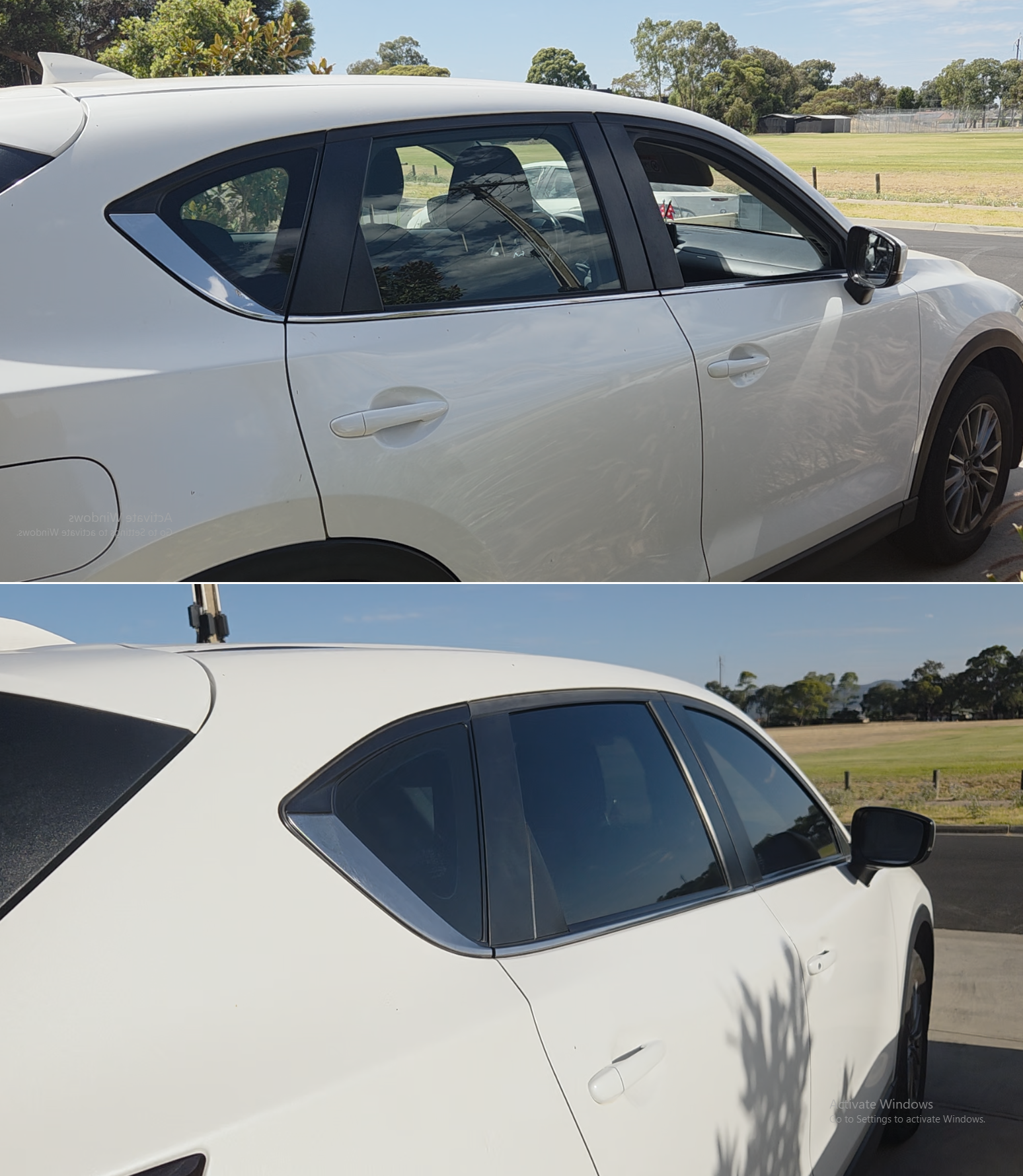
Nine cars. Five days. One home garage. No shopfront, no staff, no advertising budget. Just the skill and the bookings.
Nine cars in five days. $3,550 gross. Film costs of about $315. Net profit for the week — $3,235. From my garage. That is not a one-off either — that is what consistent, competent tinting looks like when you know what you are doing.
Step 1 — Understand What You Are Actually Building
Before tools, before film, before anything — you need to understand what kind of tinting business you are building. Because there are actually a few different models and they suit different people.
The home garage model. Customers come to you. You work from your garage or covered carport. Low overhead, maximum profit per job. Best for beginners and part-timers. This is where almost everyone should start.
The mobile model. You go to the customer. You load your kit into a van or wagon and tint at their home, office or wherever their car is. Slight premium on pricing. Needs a dust-controlled workspace at the customer's end. Great flexibility.
The shopfront model. You rent commercial premises, sign a lease, pay overheads and run a formal operation. This is not where you start. This is where you go after you have built revenue, a reputation and a customer base. Anyone who tells you to start with a shopfront has never run a small business.
Start with the home garage or mobile model. Keep your overhead at zero. Build from there.
Step 2 — Learn the Skill Properly
This is the step that separates the people who build real businesses from the people who give themselves — and the industry — a bad name. Window tinting looks simple. It is not. Film on curved glass, heat shrinking rear windows, managing contamination, cutting around defrosters — these are skills that require proper instruction to develop properly.
The person who watches three YouTube videos and starts charging customers for tinting is the person who ends up with a one-star Google review, a furious customer and a $400 bill for glass replacement. I have seen it dozens of times.
Get trained. Learn it right. Then charge for it.
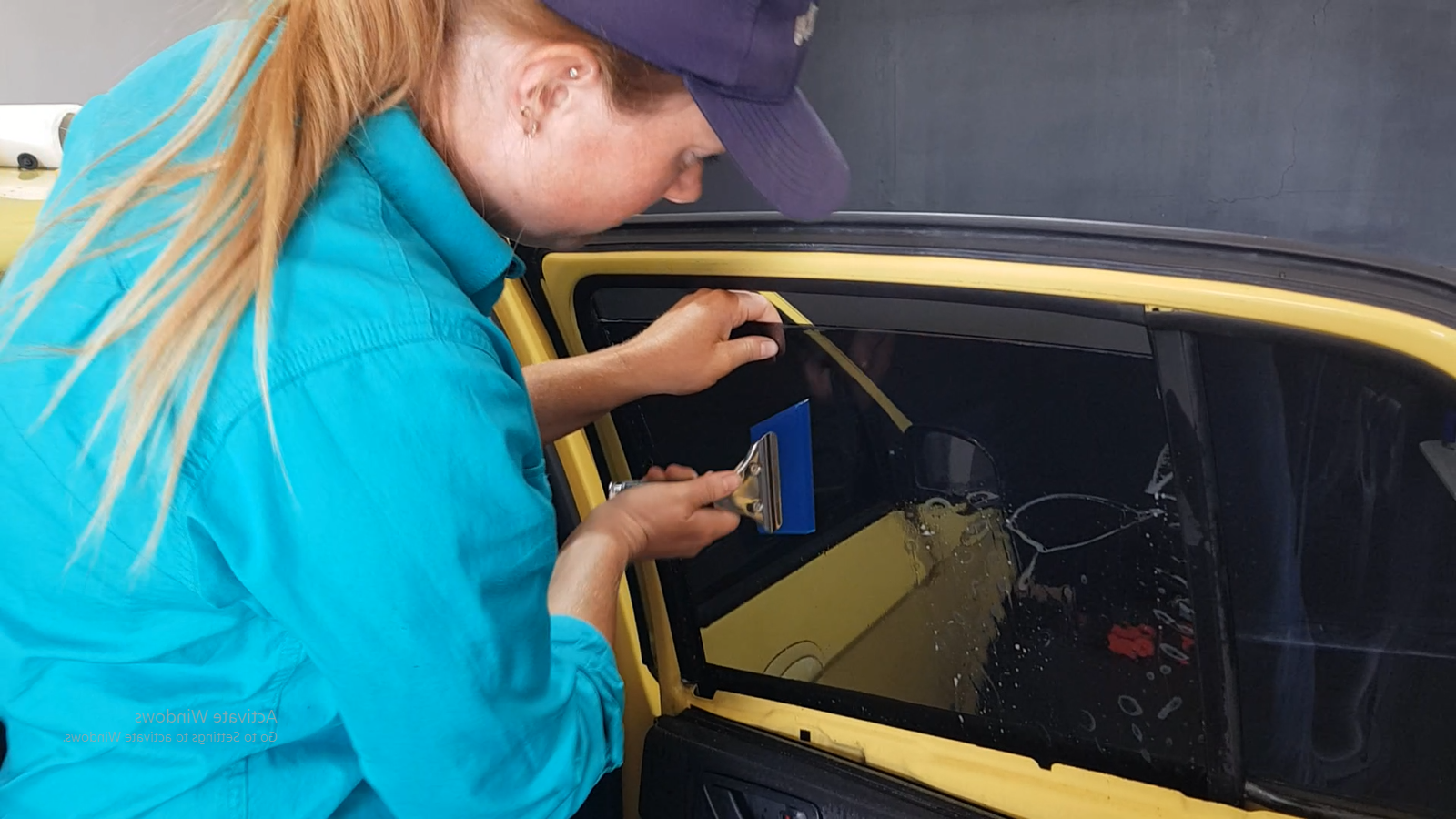
Here is what professional tinting actually looks like in practice — the real process, not a highlights reel.
The complete tinting process on a real car. This is what you are learning to do — and what customers are paying $300 to $500 for.
That process — done cleanly, consistently, on every car — is what builds a reputation. And reputation is what fills a diary.
The best investment you will ever make in this business is learning it properly before you start. Everything else — tools, film, marketing — is a fraction of the cost of one bad job done on a paying customer.
— Alex Harry · 14 years professional tinting · 15,000+ cars · Window Tint SkoolStep 3 — Your Startup Costs (It's Less Than You Think)
This is the part where people expect me to hand them a list of expensive equipment and suppliers. Brace yourself — this is going to be one of the shortest cost breakdowns you have ever seen for starting a real trade business in Australia.
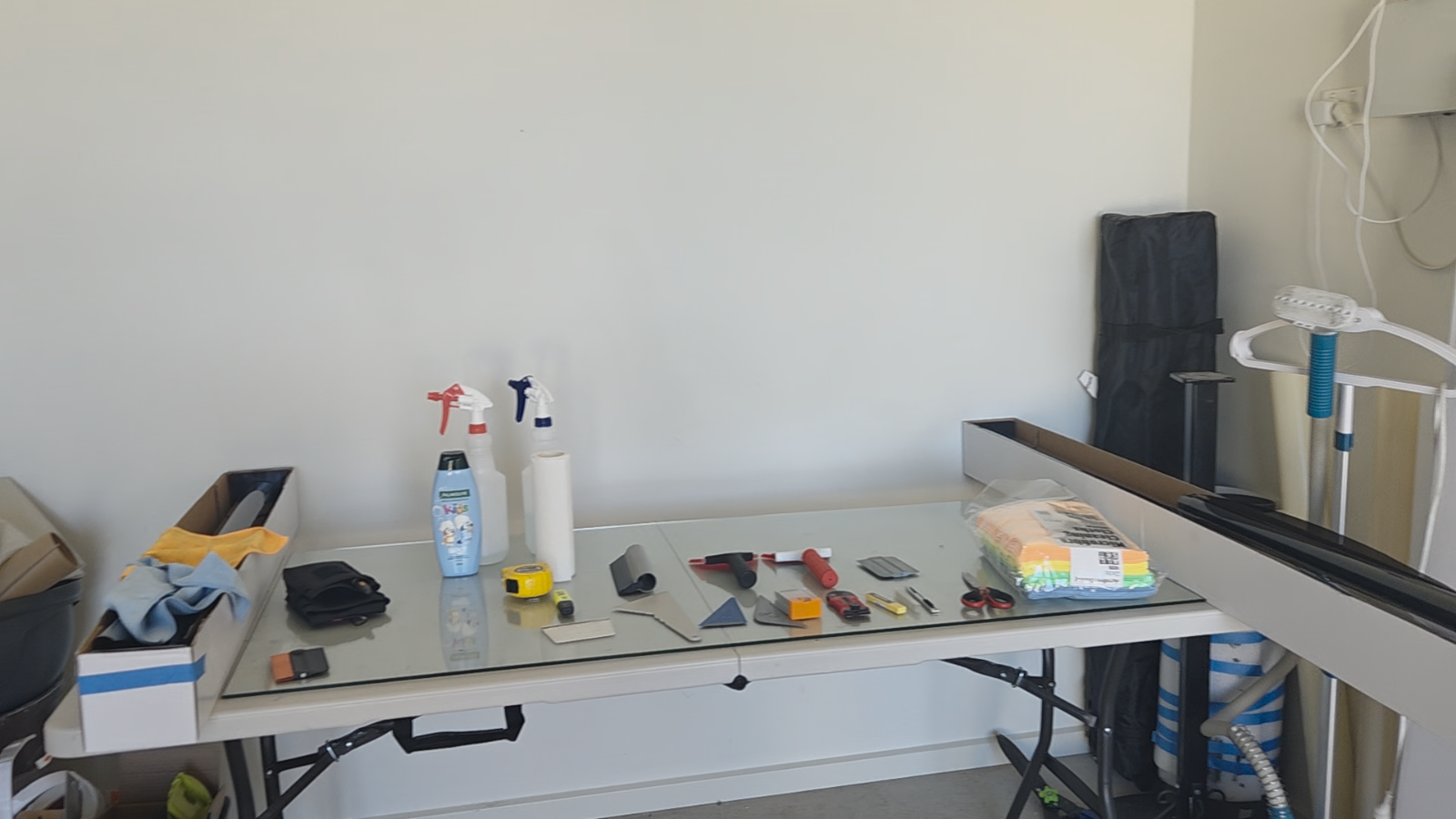
| Item | What It Is | Cost (AUD) |
|---|---|---|
| Squeegee set | Hard and soft squeegees for film application | $40–$80 |
| Hard card | For tucking edges and removing air | $10–$20 |
| Heat gun | For shrinking film on curved glass | $40–$80 |
| Knife and blades | Olfa knife — the most important tool you own | $15–$25 |
| Spray bottles | For slip solution — two minimum | $10–$15 |
| Lint-free cloths | Glass cleaning and contamination control | $20–$30 |
| VLT meter (optional) | Measures existing glass tint — non-negotiable | $50–$120 |
| First film roll (carbon 35%) | 100cm x 30m — enough for 8–12 practice cars | $200 |
| First film roll (carbon 20%) | For rear windows in legal states | $200 |
| ABN registration | Your business number — legal requirement | Free |
| Total startup cost | Everything you need to start professionally | $345–$770 |
Compare that to starting a lawn mowing run — $4,000 to $12,000 in machinery. A cleaning business — $500 to $2,000 in equipment plus chemicals monthly. A food business — $10,000 minimum before you see a customer. Window tinting has one of the lowest startup costs of any skilled trade service in Australia.
Step 4 — Set Up Your Workspace
The number one reason people delay starting a tinting business is that they think they need commercial premises. They do not. A garage, a carport or a shaded driveway is sufficient to produce professional results — as long as you understand how to manage dust and contamination, which proper training covers completely.
A standard single garage handles most sedans, hatchbacks and small SUVs. A double garage gives you room to move around larger vehicles comfortably. A carport works in calm conditions — just be aware of wind and dust, particularly in drier states.
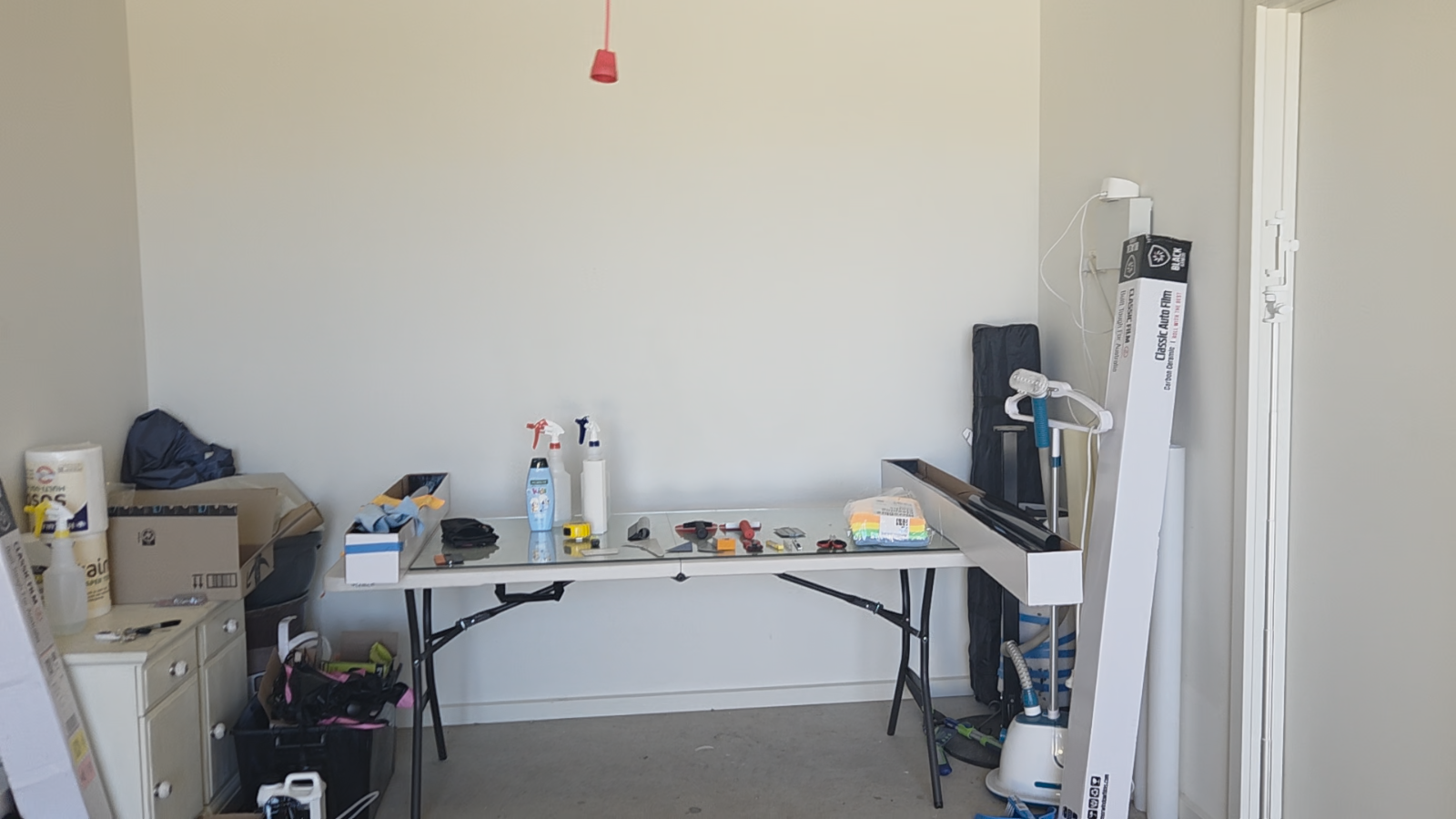
The shopfront conversation can come later — after you have built revenue, a customer base and the confidence that the business is worth investing more into. Most of the 620 students I have trained started in a garage and a significant number of them are still there by choice, earning $10,000 to $14,000 per month with zero commercial rent eating into their margins.
I tinted nine cars in five days from a home garage and banked $3,550. Not from a $3,000/month shopfront on a main road. From a garage. The skill is what produces the result — not the postcode of your workspace.
Step 5 — Register Your Business Properly
To operate as a legitimate business in Australia you need an ABN — Australian Business Number. This is not complicated, does not cost anything and takes about ten minutes on the Australian Business Register website at abr.gov.au.
You will also want to register a business name if you are trading under anything other than your own name — "Crystal Clear Tinting" for example rather than "John Smith." Business name registration costs $39 for one year or $92 for three years through ASIC.
Beyond that — public liability insurance is strongly recommended. Not legally mandatory, but if something goes wrong on a customer's vehicle, you want to be covered. Policies for trade services in Australia start from about $500 to $800 per year. For a business generating $10,000 per month that is a very small insurance premium.
No licence required. No industry registration. No government permit. Just an ABN, a business name and insurance. That is it.
Step 6 — Price Your Jobs So You Actually Make Money
Underpricing is the fastest way to kill a tinting business. New operators see what the cheapest shop in town charges and price themselves just below it to "compete." This is a mistake. Cheap prices attract cheap customers who complain, leave bad reviews and tell their friends. Professional prices attract professional customers who value the work, leave five-star reviews and come back.
Here are the real going rates across Australian cities in the current market for a home-based or mobile operator using quality carbon or ceramic film.
| Vehicle Type | Charge to Customer | Film Cost | Your Net Profit |
|---|---|---|---|
| Small Hatchback | $280–$350 | $35–$55 | $225–$295 |
| Sedan | $320–$400 | $40–$65 | $255–$335 |
| Medium SUV ⭐ Most common | $380–$480 | $55–$80 | $300–$400 |
| Large SUV / 4WD | $480–$600 | $70–$100 | $380–$500 |
| Residential window (per m²) | $35–$65/m² | $8–$15/m² | $27–$50/m² |
Run those numbers across a working week. Two cars per day, five days — that is ten jobs at an average of $330 net profit each. $3,300 per week. $13,200 per month. Before you add a single residential or commercial job.
Step 7 — Get Your First Customers
This is the part most people overthink. They assume getting customers means spending money on advertising, building a fancy website or running Meta campaigns. For your first ten customers — none of that is true. Your first customers are almost always already in your phone contacts.
Tell everyone you know. Post on your personal Facebook. Offer your first three jobs at a slight discount in exchange for a Google review and photos. Tint a family member's car for free and make sure they talk about it. Post on Facebook Marketplace. Post in local community groups. That is genuinely all it takes to get your first few bookings.
After ten jobs with five-star reviews — the organic bookings start coming in without you lifting a finger.
Beyond your immediate network — here is the full customer acquisition playbook that actually works for tinting businesses in Australia right now.
- Google Business Profile — set it up, keep it updated, ask every customer for a review. This is your single most powerful free marketing tool. A tinting business with 20 genuine five-star reviews will outperform one with zero reviews every single time, regardless of price.
- Facebook Marketplace — list your service with photos of finished work. People search Marketplace for local services constantly. Free, immediate, high conversion.
- Facebook community groups — most Australian suburbs have local buy/sell/recommend groups with thousands of members. One genuine post with a before/after photo gets you bookings within hours.
- Instagram and TikTok — post short videos of the tinting process. The transformation content performs extremely well on both platforms and costs nothing to produce. Alex's reels have reached hundreds of thousands of views and directly driven course enrolments. The same works for local tinting businesses.
- Car detailers and car washes — introduce yourself to local detailers and car wash operators. Offer a referral fee for every customer they send you. These businesses see cars every day and the upsell to tinting is a completely natural conversation.
- Facebook paid ads — once you have reviews and photos, a $20/day Facebook ad targeting your local area with a before/after image converts very well. Not for day one — but for month two or three when you have the social proof to back it up.
Want to see exactly how to get customers for a tinting business in more detail? Here is a full walkthrough.
The complete customer acquisition strategy for a tinting business — what actually works in the Australian market right now.
Step 8 — Scale When You Are Ready
Most people think about scaling before they have built anything worth scaling. Get the foundation right first — car tinting, consistent quality, strong reviews, reliable bookings. Then layer in the income multipliers.
Add residential tinting. A home tinting job pays $800 to $2,500 for a day's work. The skill set overlaps significantly with car tinting and the Window Tint Skool course covers it in full. One residential job per week transforms your monthly income.
Add commercial tinting. Office buildings, shopfronts, retail spaces. A commercial job can be $2,000 to $8,000 for a single project. These jobs come from relationships — introduce yourself to property managers, real estate agents and commercial building managers in your area.
Raise your prices. As your reviews build and your reputation grows, you can charge more for the same job. A tinter with fifty five-star reviews charges 20 to 30 percent more than one with zero reviews for identical work. Reviews are literally money.
Consider a second operator. When you are regularly turning work away because you are booked out — that is the time to consider training a second person to work alongside you. Not before.
A solo tinter doing cars only at two per day earns around $13,200 per month. Add selective residential work and that becomes $17,000 to $22,000. Add a second trained operator and the ceiling effectively disappears. This is not a business with a glass ceiling — it is a business with a glass everywhere, and you get paid to tint all of it.
What Does the Timeline Actually Look Like?
People always want the honest timeline. Not the optimistic version — the realistic one. Here is what the typical Window Tint Skool student journey looks like based on actual data from 620 graduates.
| Timeframe | Where You Are | Typical Monthly Income |
|---|---|---|
| Week 1–4 | Training, practicing on own and family cars | $0 — investment phase |
| Month 1–2 | First paying jobs, building reviews, one car per day | $2,000–$5,000 |
| Month 3–4 | Reviews compounding, referrals starting, pace increasing | $5,000–$8,000 |
| Month 6 | Two cars per day, strong review profile, bookings filling | $10,000–$13,000 |
| Month 12+ | Established operator — cars + residential + referrals | $14,000–$22,000+ |
Nobody goes from zero to $13,000 in month one. Anyone who tells you otherwise is selling something. But month six at $10,000 to $13,000 — for someone who started with no experience and under $500 — is both realistic and documented. It is what the data from our students actually shows.
The One Thing That Makes or Breaks This Business
I have trained over 620 students. I have watched some of them build genuinely impressive businesses. I have also watched some of them struggle or give up. After all that, I can tell you with complete confidence that there is one single factor that separates the people who succeed from the people who do not.
It is not talent. It is not location. It is not how much money they started with. It is not even the quality of their training — though that matters enormously.
It is the quality of their first few jobs.
The tinting business runs on reputation. Your work is visible on every car driving down every street in your suburb. A perfect tint job that a customer shows their colleagues at work on Monday morning is worth more than any advertising budget. A bubbling, lifting, contaminated install that a customer posts about on a local Facebook group at 9pm on a Saturday will follow you for years.
Get the first jobs right. That means being properly trained before you touch a paying customer's car. Practice on your own vehicle. Practice on a family member's car. Practice on a friend's car. Five practice installs before your first paid booking is not excessive — it is the baseline professional standard.
Do that, and the rest of the business builds itself.
Ready to Start Your Tinting Business?
Everything in this article — the tinting skill, the business setup, how to get customers, residential and commercial tinting — is covered in full inside Window Tint Skool. One course. Instant access. Start today.
Yes — I'm Ready to Start - $147 AUD →✅ Money Back Guarantee · Instant Access · Lifetime Membership · One Time Payment